At Corrective Spinal Care of California, we frequently see patients suffering from plantar fasciitis. Plantar fasciitis is a painful condition that occurs when connective tissue in the bottom of the foot becomes irritated and inflamed. The plantar fascia is a band of tissue that connects your heel to your toes and is the primary support for your foot’s arch. This band of tissue is also connected to your Achilles tendon, calf, and soleus muscles.
Most sufferers of plantar fasciitis describe it as a sharp, stabbing pain at the front of their heel. It is usually more irritated first thing in the morning or with the first steps after long periods of inactivity.
The plantar fascia serves to absorb the forces of walking throughout the day. The average active American takes between 7,000 and 10,000 steps per day. For a person weighing 170 lbs, that is at least 1,190,000 pounds passing through the plantar fascia per day! Repeated trauma to this tissue causes microtears and injuries, leading to inflammation and pain.
Many factors increase your risk of plantar fasciitis. Those whose feet naturally bend inward, a condition called “pronation,” are more likely to develop plantar fasciitis. This is because a pronated foot provides less support to the arch and eventually leads to its weakening and collapse. Another common risk factor is age, with those 40–60 being more likely to develop the condition. Daily activity and lifestyle also play a big role – spending more hours on your feet increases the risk, which is why teachers and factory workers are more susceptible to developing plantar fasciitis. The most common cause of plantar fasciitis is excess body weight. With a BMI of over 30, you are six times more likely to develop plantar fasciitis.
Plantar fasciitis, left unchecked, can develop into a more serious problem. As the condition worsens, it can affect your walking mechanics, leading to damage in the knees, hips, or lower back. When left untreated, this condition can also develop into heel spurs, bony growths on the heel bone that may cause a stabbing sensation. We encourage anyone experiencing symptoms to be assessed for treatment earlier rather than later.
Here at Corrective Spinal Care of California, our doctors are skilled in treatment techniques such as adjustments, exercises, and soft-tissue work to stop plantar fasciitis in its tracks.
$149 New Patient Special
Includes Private Consultation to discuss your needs & concerns, Gentle Chiropractic Examination to find out what’s wrong, Any necessary X-rays to understand your condition fully, Report of Findings.
How Our Better, Stronger, Healthier Plan Works
1. Better
Many people seek help from a chiropractor only when they are suffering from such intense pain that it is interfering with their daily life. Chiropractic classifies treatment in this period of intense pain as relief care. The chiropractor’s focus during this period is to alleviate your symptoms. Sometimes, this will require daily visits or two to three visits per week for some time.
2. Stronger
We regard eliminating your symptoms as the easiest part of a persons care. If we stop there it’s very likely that the underlying cause of the pain (disk problem, curved spine, limited range of motion, etc.)will cause a recurrence of the condition. If you repeat the process of treating only the pain, then over time your structural problem will only worsen leading to a chronic state of pain and suffering.
3. Healthier
Once the chiropractor determines that you have fully recovered from your injury you are ready for treatment in Stage 3 – Wellness. As strange as it may seem this might well be the most important part of the entire process. Most of the injuries that people suffer that lead them to chiropractors occur because their bodies aren’t really in overall good health.
How We Treat Plantar Fasciitis In Escondido, CA
Comprehensive Consultation and Exam
New patients at Corrective Spinal Care of California begin with a thorough consultation and exam. Our doctors take time to understand your condition, its impact on your life, and your recovery goals. This ensures we’re aligned in our efforts to achieve your desired outcomes.
The initial exam includes orthopedic, functional movement, and chiropractic tests to identify the source of the issue and determine whether it’s a disc, spine, bone, or muscle problem. This detailed evaluation allows us to provide personalized treatment recommendations to help you resume the activities you enjoy.
Digital X-Rays
At Corrective Spinal Care of California, we use standing digital X-rays when necessary to get a clear picture of your spine and extremities. These X-rays help us detect prior injuries, abnormalities, improper biomechanics, or degenerative changes contributing to your plantar fasciitis. For plantar fasciitis management, this blueprint is essential. They can also reveal conditions like heel spurs, osteoporosis, tumors, arthritis, spinal misalignments, or fractures. If your issue isn’t chiropractic-related, we’ll refer you to the appropriate specialist.
By analyzing your spinal mechanics, our chiropractors can identify the exact source of your pain. This precision is key to designing an effective, individualized treatment plan. Many of our patients have seen multiple chiropractors, podiatrists, physical therapists, and massage therapists without success. At Corrective Spinal Care of California, we often find the problem lies outside the plantar fascia, addressing root causes others may miss.
Modern digital X-ray technology uses minimal radiation, and the diagnostic benefits far outweigh the risks. It’s a safe, invaluable tool for managing plantar fasciitis. After completing your corrective care plan, we take follow-up X-rays and compare them with the initial set to confirm the issue is resolved and ensure you won’t face the same problem in the future.
Specific Chiropractic Care in Escondido, CA
As expert chiropractors at Corrective Spinal Care of California in Escondido, CA, we understand the critical role spinal alignment plays in addressing plantar fasciitis. When a vertebra misaligns, a condition known as subluxation, it can exert pressure on spinal nerves, including those supplying the bottom of the foot. Misaligned vertebrae and pelvises may affect your walking patterns, directly impacting your feet. Our expertise lies in precisely identifying and correcting these subluxations through targeted chiropractic adjustments. By restoring proper vertebral alignment, we alleviate nerve irritation, reduce pain, and enable the body to heal naturally and function optimally.
The nervous system’s healing process can be gradual, particularly for chronic cases, demanding patience and consistency. However, when the root cause is accurately addressed through our comprehensive chiropractic strategies, the prognosis remains highly favorable, empowering patients to regain their quality of life. Plantar fasciitis is a multifaceted condition that often stems from overlapping causes, such as muscle imbalances, improper walking mechanics/habits, and misaligned bones. This complexity requires a tailored approach, which is why we develop individualized care plans for each patient.
Custom Therapeutic Exercise Plan
When discussing stretching and strengthening of the plantar fascia, it is important to understand the local anatomy. “Fascia” itself has a distinct structure when compared to muscles, tendons, or ligaments. The main difference is that fascia is a web of connective tissue. This web of connective tissue wraps around muscles, bones, and joints, providing structural support.
The plantar fascia supports all three arches of your foot: the medial, lateral, longitudinal, and transverse arches. These three arches form an anatomical triangle and support the forces transferred from the ground. This is why people with certain jobs are more susceptible to plantar fasciitis, as their daily activities put more force through their arches.
Plantar fasciitis is a multifaceted condition. The cause of this condition is rarely at the base of the foot where the symptoms are felt. We must also pay attention to the Achilles tendon, calf, and intrinsic muscles of the foot. The plantar fascia is an extension of these tissues. When these muscles are looser and stronger, this will also aid with ankle mobility, allowing your plantar fascia to bear less load.




Who Does Plantar Fasciitis Affect in Escondido, CA?
Runners
Plantar fasciitis is one of the most common conditions that keeps runners off their feet. Higher loads at high speeds, combined with repeated trauma, create a recipe for plantar fasciitis. These repetitive traumas not only wear out the plantar fascia but also take a toll on our foot bones, tendons, and muscles. This is why running mechanics are so important. If runners strike the ground with their heels instead of their forefeet, the heels will absorb more force, which may lead to heel pain. Runners should ensure they are using appropriate footwear. Investing in a high-quality pair of running shoes is well worth it for reducing injuries. Running should be reduced when dealing with a severe case of plantar fasciitis.

Obese Individuals
Plantar fasciitis is a health condition caused by repetitive trauma to the sole. With more force exerted, the potential for trauma grows. This is also true for the body weight that our feet must support. When the plantar fascia is overloaded, microtears and inflammation may form, leading to discomfort at the base of the foot. This condition can affect every aspect of a person’s life when it limits their ability to walk. Weight loss is a proven way to combat plantar fasciitis. Reduced body weight will reduce pressure on the plantar fascia, allowing it to heal more effectively.
Pregnant Women
Pregnant women, specifically those in the third trimester, are commonly affected by plantar fasciitis. This is mostly due to the rapid weight gain over this short time frame. The body does not have ample time to develop the proper tissues to accommodate this extra load. Pregnant moms are also more vulnerable to plantar fasciitis due to changes in their walking mechanics as their joints loosen with increases in the hormone relaxin. Plantar fasciitis may mimic other conditions, such as pre-eclampsia. This is why pregnant moms should always have any health condition monitored by a professional to rule out more serious conditions. The best methods for managing plantar fasciitis in moms-to-be are adjustments, soft-tissue work, and rest.
Certain Occupations
Jobs that require people to be on their feet for long hours during the day often increase the risk of plantar fasciitis. As the band of tissue at the bottom of the foot becomes overused, it can develop microtears and inflammation, leading to tenderness. Since this region is under high stress whenever we are on our feet, repetitive trauma can make healing more difficult. Consult a professional to develop a plan to manage your plantar fasciitis.
People with Certain Foot Structures
Certain foot structures leave people more susceptible to plantar fasciitis. This is especially true for foot morphologies that lack a high arch, commonly known as “flat feet.” An arched foot does a much more efficient job at absorbing forces compared to a flat foot. Some people may have arches that are too high, which concentrate more force on smaller areas, making them more susceptible to plantar fasciitis. Choose footwear that suits your foot shape. Some stretches and exercises may also be beneficial in managing this condition. Regardless of foot structure, it is important to ensure walking biomechanics are optimal to reduce the risk of developing plantar fasciitis or other conditions.
Check Out Our Location Near You
330 W Felicita Ave Suite B-1, Escondido, CA 92025
Frequently Asked Questions About Plantar Fasciitis
Is it bad to walk with plantar fasciitis?
Walking with plantar fasciitis is safe. However, depending on the severity of your condition, a period of rest or reduced load may be necessary. Stretches and strengthening should accompany this rest. Plantar fasciitis can persist for long periods if not properly treated. If you continue to overwork your foot while it is injured, there might not be an opportunity for your body to heal the injury. This is why a prompt checkup by a professional is important.
Do cortisone shots help with plantar fasciitis?
Pain relief for plantar fasciitis using cortisone shots may last anywhere from 6 weeks to 6 months. Cortisone shots are steroid shots, which reduce the inflammation and therefore the pain in this condition. However, cortisone shots do nothing for the cause of plantar fasciitis, and the pain will return once the shot wears off. Pursuing a solution that targets the cause of your problem, such as chiropractic care, will always be preferred.
Is a foot massage good for plantar fasciitis?
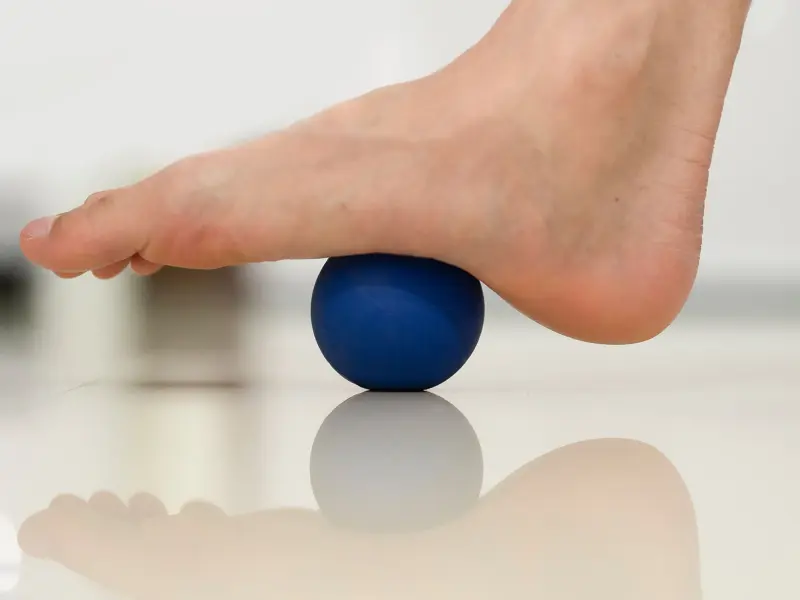
A foot massage can help relieve symptoms of plantar fasciitis. As the inflammation develops in the plantar fascia, trigger points may develop in the surrounding muscles and soft tissues. A proper massage may help to break up these adhesions and provide some relief. However, massage alone will not cure plantar fasciitis.
What exercise can you do when you have plantar fasciitis?
The best plantar fasciitis exercises focus on the muscles of your feet and calves. Try scrunching up and spreading a towel using your toes on the ground as a simple exercise. Calf exercises such as heel raises paired with calf stretches may also be beneficial. Focusing on the calf and the Achilles is important because your plantar fascia is a continuation of these tissues.
What aggravates plantar fasciitis?
Plantar fasciitis may be aggravated by continuing the same habits that initially caused the condition. The most common causes include being on your feet for too long, prolonged strenuous hiking or running, improper footwear, foot biomechanics, or inadequate rest. To reduce the risk of worsening your condition, get checked by a professional to expedite your healing.
$149 New Patient Special
Includes Private Consultation to discuss your needs & concerns, Gentle Chiropractic Examination to find out what’s wrong, Any necessary X-rays to understand your condition fully, Report of Findings.