As chiropractors in Escondido, CA, we frequently see patients with Temporomandibular Joint Dysfunction. This condition, commonly known as TMJ, affects the jaw joint and may also cause headaches, ear ringing, and neck pain. TMJ dysfunction, TMJD, can occur on one or both sides of the jaw and may stem from multiple sources. Chiropractors are well-equipped to naturally and effectively treat TMJD.
Common symptoms of TMJD include jaw pain, clicking or popping, and difficulty chewing. TMJD is also frequently associated with neck pain and headaches. The reason TMJD, neck pain, and headaches often go hand in hand is that they are all related to the numerous nerves and blood vessels that run through our head and neck. When one of these structures is affected, such as by a pinched nerve, symptoms often appear in multiple areas of the body. This is why chiropractic care can be especially effective in treating TMJD.
The temporomandibular joint is a hinge joint, similar to the knee. It is designed to open and close in one direction. The joint is located where the jawbone meets the skull, directly in front of each ear. The TMJ also has a disc, similar but not identical to the discs between our vertebrae. People suffering from TMJD may be suffering from the displacement of this disc. This is especially prevalent when experiencing a locked jaw. A locked jaw is a condition in which the jaw may become “stuck” in either the open or closed position.
Although TMJD affects between 10 and 35 million people in the USA alone, a disproportionate number of the severe cases are seen among women. Women aged 20–40 make up 90% of severe TMJD cases. Dentists and other oral professionals have primarily treated this condition over the past century. Traditional treatment methods may include splints, implants, Botox injections, and even surgery. We always recommend pursuing conservative treatment such as chiropractic care, lifestyle changes, splints, and exercises before attempting invasive procedures.
$149 New Patient Special
Includes Private Consultation to discuss your needs & concerns, Gentle Chiropractic Examination to find out what’s wrong, Any necessary X-rays to understand your condition fully, Report of Findings.
How Our Better, Stronger, Healthier Plan Works
1. Better
Many people seek help from a chiropractor only when they are suffering from such intense pain that it is interfering with their daily life. Chiropractic classifies treatment in this period of intense pain as relief care. The chiropractor’s focus during this period is to alleviate your symptoms. Sometimes, this will require daily visits or two to three visits per week for some time.
2. Stronger
We regard eliminating your symptoms as the easiest part of a persons care. If we stop there it’s very likely that the underlying cause of the pain (disk problem, curved spine, limited range of motion, etc.)will cause a recurrence of the condition. If you repeat the process of treating only the pain, then over time your structural problem will only worsen leading to a chronic state of pain and suffering.
3. Healthier
Once the chiropractor determines that you have fully recovered from your injury you are ready for treatment in Stage 3 – Wellness. As strange as it may seem this might well be the most important part of the entire process. Most of the injuries that people suffer that lead them to chiropractors occur because their bodies aren’t really in overall good health.
How We Treat TMJ Pain In Escondido, CA
Comprehensive Consultation and Exam
New patients at Corrective Spinal Care of California begin with a thorough consultation and exam. Our doctors take time to understand your condition, its impact on your life, and your recovery goals. This ensures we’re aligned in our efforts to achieve your desired outcomes.
The exam includes orthopedic, functional movement, and chiropractic tests to identify the source of the issue—whether it’s a disc, spine, or muscle problem. This detailed evaluation allows us to provide personalized treatment recommendations to help you resume the activities you enjoy.
Digital X-Rays
At Corrective Spinal Care of California, we use standing digital X-rays to get a clear picture of your spine. For TMJ management, this blueprint is essential. X-rays help us detect prior injuries, abnormalities, improper biomechanics, or degeneration that may be contributing to your TMJ problem. They can also reveal conditions like osteoporosis, tumors, arthritis, spinal misalignments, or fractures. If your issue isn’t chiropractic-related, we’ll refer you to the appropriate specialist.
By analyzing your spinal mechanics, our chiropractors can identify the exact source of your pain. This precision is key to designing an effective, individualized treatment plan. Many of our patients have seen multiple chiropractors, dentists, physical therapists, and massage therapists without success. At Corrective Spinal Care of California, we often find the problem lies outside the actual TMJ, addressing root causes others may miss.
Modern digital X-ray technology uses minimal radiation, and the diagnostic benefits far outweigh the risks. It’s a safe, invaluable tool for managing TMJD. After completing your corrective care plan, we take follow-up X-rays and compare them to the initial set to confirm the issue is resolved—ensuring you won’t face the same problem for years to come.
Specific Chiropractic Care in Escondido, CA
As expert chiropractors at Corrective Spinal Care of California in Escondido, California, we understand the critical role spinal alignment plays in addressing TMJD. When a vertebra misaligns, a condition known as a subluxation, it can exert pressure on spinal nerves, including those supplying the TMJ and its surrounding muscles.
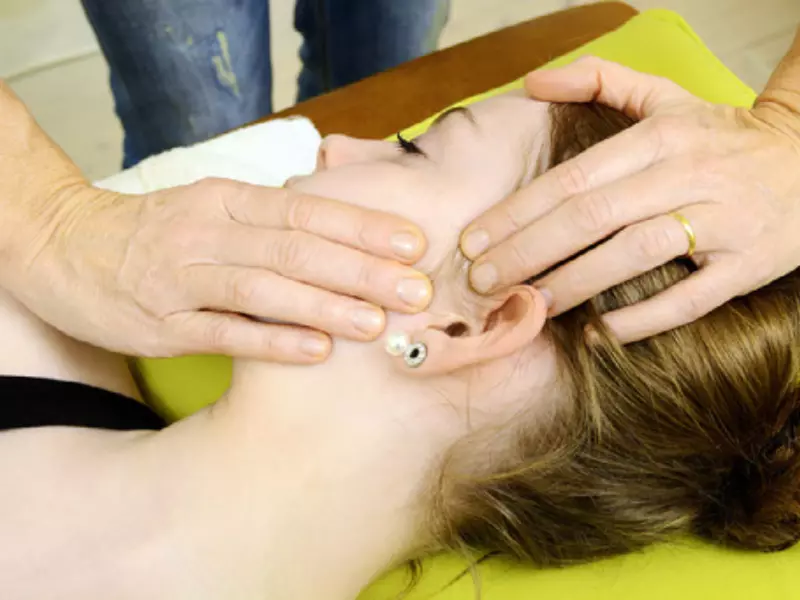
Similar to the spine, the TMJ is a joint where two bones meet, separated by a fibrocartilage disc. Often, adjustments to the TMJ itself can improve its function. Our expertise lies in precisely identifying and correcting these subluxations through targeted chiropractic adjustments. By restoring proper vertebral alignment, we alleviate nerve irritation, reduce pain, and enable the body to heal naturally and function optimally.
TMJD is a multifaceted condition, often stemming from overlapping causes such as disc issues, muscle imbalances, or harmful habits. This complexity requires a tailored approach, which is why we develop individualized care plans for each patient. The nervous system’s healing process can be gradual, particularly for chronic cases, demanding patience and consistency. However, when the root cause is accurately addressed through our comprehensive chiropractic strategies, the prognosis remains highly favorable, empowering patients to regain their quality of life.
Custom Therapeutic Exercise Plan
The main muscles surrounding the TMJ are the masseter (angles of the jaw), temporalis (temples of the head), and the internal and external pterygoids (only palpable from inside the mouth). These muscles have a high daily workload and can easily become sensitive. Jaw clenching, eating chewy foods, and long periods of talking can all strain these muscles. When it comes to chronic TMJD, these muscles must receive the right amount of strength training, stretching, and soft-tissue work, just as with any other muscular imbalance or injury. After a thorough examination and getting to the bottom of your problem, our doctors will determine the exercises, stretches, and lifestyle changes best suited to you.




Common Symptoms of TMJD in Escondido, CA
Jaw Pain
Jaw pain is the most common symptom of dysfunction of the temporomandibular joint. TMJD often manifests as a deep, boring ache and can be irritated with or without long periods of eating or talking. Jaw pain is often associated with ear, facial, and neck pain.
What causes this jaw pain? There can be many culprits, such as recent dental work, trauma, grinding teeth, improper TMJ mechanics, pinched nerves, or tight muscles in the head and neck. The best course of action to get relief from jaw pain related to TMJD is to consult a health care professional.

Jaw Popping and Clicking
Jaw popping and clicking are often signs of TMJD. These audible sounds, which may occur when opening or closing your mouth, often mean that the fibrocartilage disc in your jaw is being displaced. Clicking or popping does not always have to be painful, but it is frequently an irritation in daily life.
To address this problem, the disc must be guided back into its proper position to ensure smooth movement between the mandible and the temporal bones. This can be achieved through adjustments, exercises, stretches, and soft-tissue work.
Jaw Clenching
Jaw clenching—biting your teeth together with excessive force for long periods—can have many causes. The most common causes are stress and anxiety. Oftentimes when people are stressed or anxious, they do not even notice that they are clenching their jaw, and this commonly happens while asleep.
Chronic clenching of your jaw can lead to muscle tension and trigger points developing in your muscles of mastication. The most commonly affected muscles are the temporalis, found on both temples, and the masseter, found at the angle of the jaw. Prolonged jaw clenching can even cause these muscles to refer pain in the form of tension headaches. While trigger point therapy may be beneficial for muscle tension, the best treatment for jaw clenching is to find ways of coping with stressors through exercise, yoga, or meditation.
Difficulty Chewing
The temporomandibular joint, commonly known as the jaw joint, is one of the most important and heavily utilized joints in our body. It not only allows us to chew and digest our food for the energy we need for the day, but also to communicate with one another. Many people’s favorite foods place a high demand on their masticatory muscles. Chewy steaks or juicy apples exercise our temporalis and masseter muscles.
When there is chronic tension building up around the TMJ, we need to first get to the bottom of why this is happening. After a thorough examination and any necessary X-rays, our team will recommend treatments tailored to your specific circumstances.
Jaw Locking
Jaw locking happens when the fibrocartilage disc of the TMJ becomes displaced. The disc may be dislodged so far forward that it acts as a physical barrier. This then “locks” the jaw from achieving its appropriate range of motion. The jaw may become “locked” in an open or closed position.
This condition impacts quality of life, making eating, talking, and even laughing more difficult. When the disc becomes displaced in this manner, the body instinctively tightens the surrounding muscles in order to provide more stability to your TMJ. Therefore, the first step in addressing this condition is to relax the muscles via heat, massage, and proper stretching. Once the muscles are relaxed, the appropriate adjustments may be made to replace the TMJ’s fibrocartilage disc.
Check Out Our Location Near You
330 W Felicita Ave Suite B-1, Escondido, CA 92025
Frequently Asked Questions About TMJ Dysfunction
Can chiropractic in Escondido, California help with TMJ?
Yes! The temporomandibular joint, TMJ, is intricately involved with your spine, and many of the nerves supplying your TMJ connect with the nerves in your upper neck. We see many patients with temporomandibular joint dysfunction, TMJD, being caused by neck problems, and also many patients with neck problems caused by TMJD. We will conduct a thorough examination and any necessary X-rays to determine if your problem is indeed a chiropractic one. Our doctors have had extensive training surrounding TMJ disorders and are ready to help you.
Can you fix TMJ without surgery?
The majority of TMJ cases are able to be significantly improved without the use of injections or surgery. Depending on the nature and severity of your TMJ dysfunction, proper muscle and joint manipulation techniques have a high success rate of improving your symptoms. We always encourage patients to seek out conservative treatment measures before considering options like surgery, injections, or implants. The chiropractors at Corrective Spinal Care of California have extended education in managing TMJD.
Can chiropractors crack jaws?
The temporomandibular joint, TMJ, is a joint like any other in your body where two bones meet. The TMJ even has a fibrocartilage disc at its junction point, not identical to, but similar to, the discs in our spine. The TMJ should act like a garage door; either side of your jaw should open and close simultaneously. When there is a discrepancy in this system, it can lead to imbalances in muscle and tissue tone. Generally speaking, the side of your TMJ that opens the least and opens last is the involved side. Since the jaw joint is a heavily utilized joint used in talking and eating, these problems can quickly worsen. Adjustments to your TMJ are oftentimes an important part of your TMJ recovery. Depending on the nature of your TMJ dysfunction, a tool called the activator may also be used to deliver a gentle and safe adjustment through your TMJ to help restore proper range of motion.
What happens if TMJ is left untreated?
When TMJ is left untreated, it will continue to worsen, just like any other problem in the body left ignored. Due to the complexity of the jaw, head, and neck region, TMJ pain may refer to other parts of your head and neck, manifesting as ear pain, facial pain, tension headaches, and neck pain. It’s important to address TMJ dysfunction before the problem becomes more complex.
What causes TMJ to flare up?
The temporomandibular joint may flare up for many reasons. The main culprits include recent dental work, trauma, grinding teeth, and improper TMJ mechanics. All of these problems will mainly affect either the muscles of your TMJ or the joint’s alignment and disc. Oftentimes symptoms can be alleviated with symptom-based solutions such as painkillers; however, when treating TMJ, the root cause must be addressed. If the root cause is not addressed, the problem will often come back.
$149 New Patient Special
Includes Private Consultation to discuss your needs & concerns, Gentle Chiropractic Examination to find out what’s wrong, Any necessary X-rays to understand your condition fully, Report of Findings.